
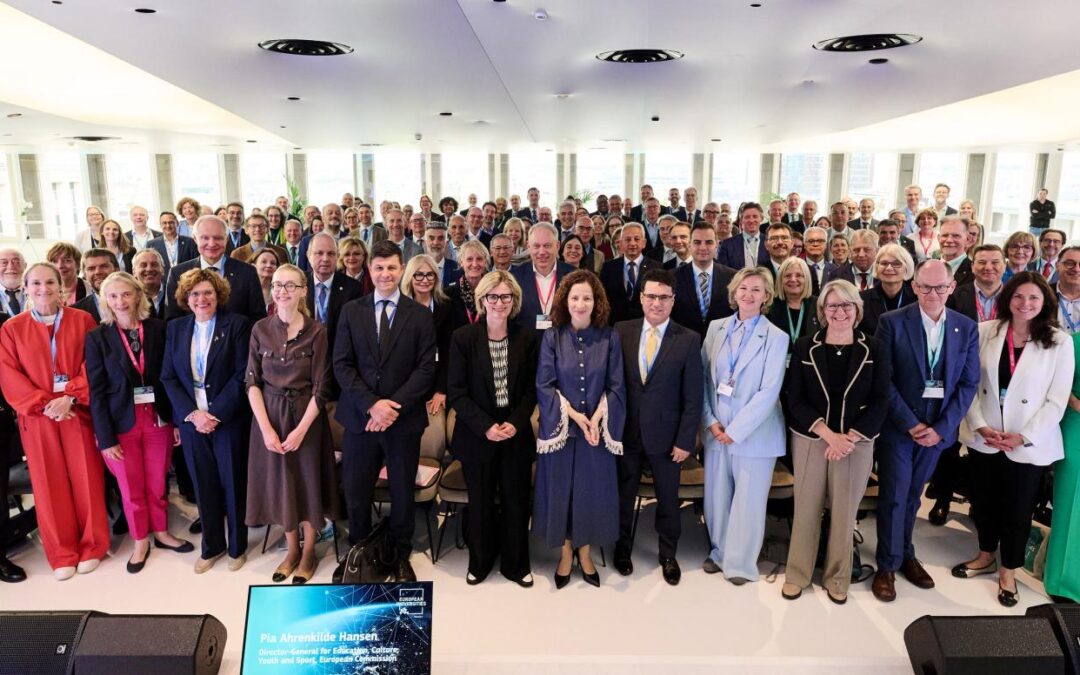
On 10 June 2026, around 150 rectors and presidents representing the 73 European Universities alliances met in Brussels with representatives of the European Commission to discuss the future of the European Universities initiative. Earlier this year, the Commission also brought together around 250 alliance coordinators to discuss the practical implementation of the initiative and how it can continue to grow in the years ahead.
Both meetings took place in the context of the work of the European High-Level Skills Board and focused on the future of the European Universities initiative and its contribution to skills, innovation and competitiveness in Europe.
Today, the European Universities initiative brings together almost 650 higher education institutions from 35 countries, including all EU Member States.
Why this matters
The meetings took place at a key moment for European higher education, against the background of several major policy developments:
- negotiations on the next EU funding programmes and the Multiannual Financial Framework (MFF)
- European Education Area, the EU's goal of creating a shared education space
- Union of Skills, which helps people across Europe develop the skills they need for today's economy
- achieving the Fifth Freedom: mobility of researchers, scientific knowledge, and innovation in EU’s Single Market
- Competitiveness Compass meant to reinforce EU’s economy autonomy
- reintegration of the United Kingdom and Switzerland to the Erasmus+ programme
- the upcoming European Research Area Act, which will address structural challenges in research and innovation
The discussions gave participants the opportunity to exchange ideas on how the European Universities alliances can help support these priorities and strengthen cooperation across Europe.
Key discussion topics
The 10 June Presidents and Rectors High-level meeting featured a keynote speech by Roxana Mînzatu, Executive Vice-President for Social Rights and Skills, Quality Jobs and Preparedness.
Participants discussed how the European Universities alliances can:
- help students develop the skills they need for the future
- support innovation in teaching and learning
- strengthen cooperation between universities across Europe
- promote research and innovation
- help make Europe more competitive in a rapidly changing world
- reduce barriers between education and research systems
- create more opportunities for mobility and cross-border collaboration
"We need strong, independent universities, where academic freedom is protected. Where trust in science is encouraged. Where innovation and ingenuity lead to success, in Europe and globally. The European University Alliances can lead the way."
Roxana Mînzatu, Executive Vice-President for Social Rights and Skills, Quality Jobs and Preparedness