
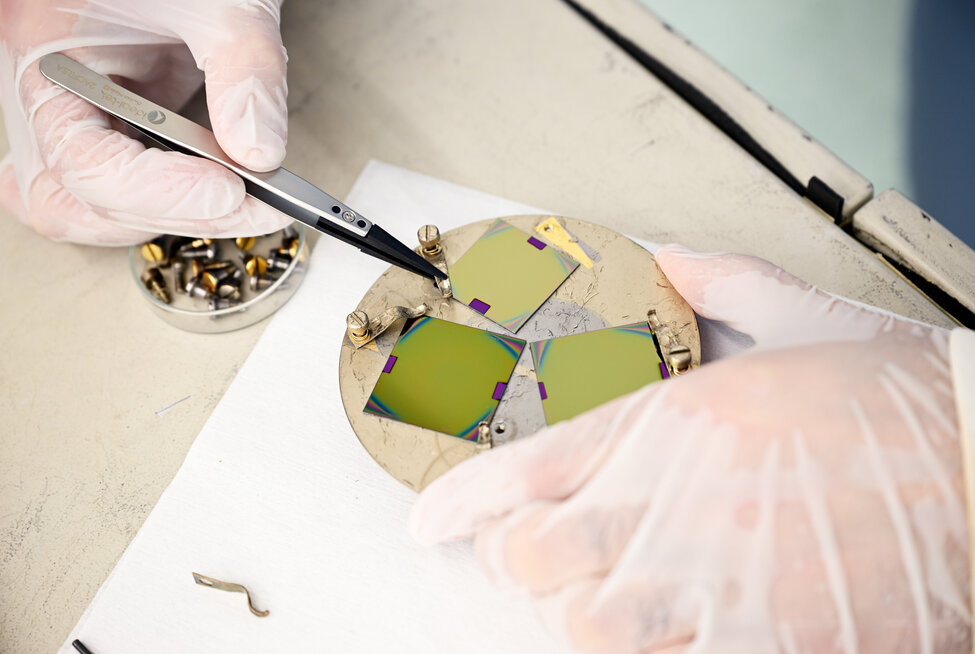
Even though our smartphones have more speed and memory with the release of each new model, we don't have to charge the battery more often. The energy consumption of those compact computers in our pockets remains limited, despite the increasing computing power of electronic chips. Yet the limit is coming into sight, especially with the gigantic amounts of data we increasingly send and receive in society. Photonics – which involves sending signals using light – may be the solution. But how can photonic chips be combined with today's electronic chips? At TU/e, we are pioneering so-called 'hybrid chips' because we have both the right ecosystem and areas of expertise to facilitate this key future innovation.
Pioneering ‘hybrid chips’ to make the most advanced square centimeter even more efficient (tue.nl)