
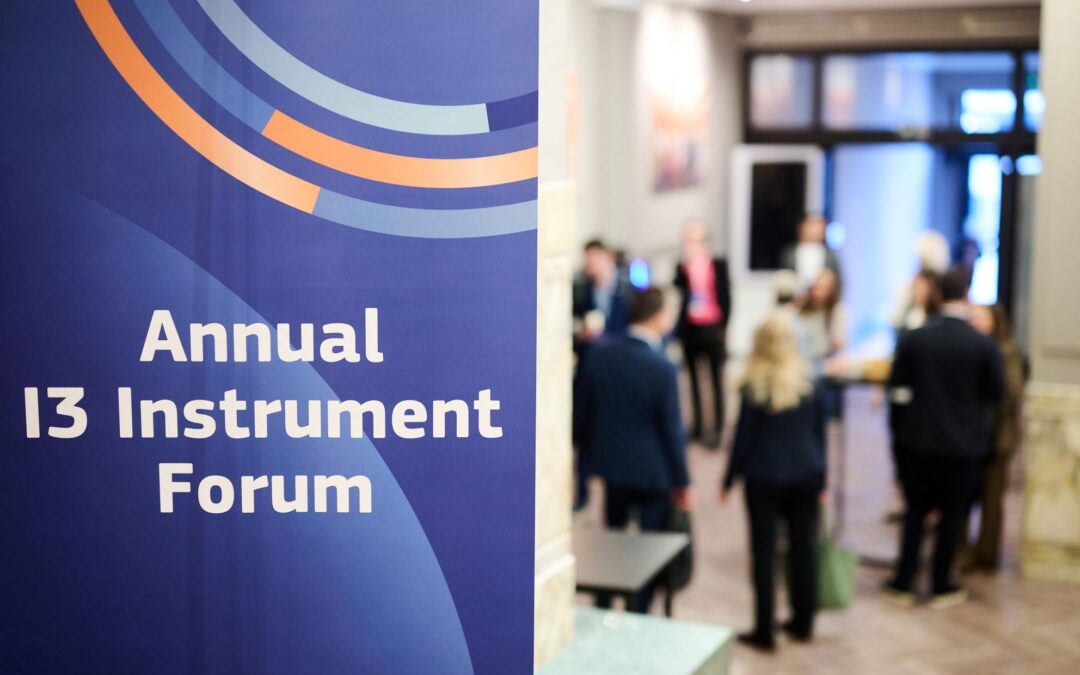
The Annual I3 Instrument Forum 2026 brought the I3 Instrument community together in Brussels to showcase how interregional cooperation is turning regional strengths into investment, market opportunities and stronger European value chains.
On 1 October, I3 Instrument project representatives, businesses, policymakers, and innovation stakeholders gathered in Brussels for the Annual I3 Instrument Forum 2026.
Five years after the launch of the I3 Instrument, this year's Forum put the spotlight on impact: what I3 Instrument is delivering across European regions, how project results are moving towards the market, and how the Instrument can contribute to Europe's competitiveness and cohesion.
Five years of I3 Instrument: first evidence of impact
After five years, I3 Instrument now reaches almost all EU regions. Proposals have involved 229 of the EU's 244 NUTS2 regions (nomenclature of territorial units for statistics, basic regions (for regional policies)), while funded projects cover 185 regions and all Member States. The portfolio has grown to 84 projects, with around €356 million awarded and 1,500 different organisations involved.
The I3 Instrument Observatory Report 2026, presented during the Forum, provides the first evidence from completed projects. Seven of eight completed investment projects reached Technology Readiness Level (TRL) 8 or 9, bringing innovations close to market readiness.
Importantly, cooperation is continuing beyond EU funding: all 17 completed projects continue to work with their partners, while three of the eight completed investment projects have secured follow-on financing.
More than €35 million has also been mobilised through cascade funding, helping SMEs participate in interregional innovation investments and channeling resources towards Less Developed Regions.

Building stronger regional innovation ecosystems
Behind these figures are concrete changes within regions.
In North-East Romania, SustainX helped establish the SAGE Hub, a not-for-profit innovation hub providing a single entry point for innovative companies seeking support within the regional ecosystem.
Bridge & Shift showed how interregional learning can change the way regional ecosystems operate. After identifying gaps in data-driven decision-making and communication in one participating German region, the region recruited a data analyst and a communication analyst, improving its engagement with companies.
In the textile sector, RegioGreenTex created a Mirror Group bringing together project partners, SMEs and policymakers, helping connect project activities with regional policy and future investment even after the end of the project.
These examples show that I3 Instrument is not only financing individual innovations. It is helping regions build capabilities, relationships and ways of working that can continue after projects end.
Connecting regional strengths through European value chains
The Forum also showed how different regional strengths can become complementary parts of European value chains.
SICAPERMA is working to reduce Europe's dependence on imported critical raw materials by recycling permanent magnets. It has already produced magnets from recycled material and integrated them into technologies and products. Half of its project partners come from Less Developed Regions.
DeremCo is creating value chains for recycled composite materials, including hubs in Less Developed Regions, while BATMASS connects regional capabilities across the battery value chain to support circularity and the use of secondary materials.
In the Mediterranean, AquaLoops4Med attracted 25 SME applications to its cascade funding scheme, compared with five initially expected. Meanwhile, IT4EST has tested ten wildfire-management technologies in nine test beds across five countries.
All these examples show that there is innovation and competitiveness potential in every European region.
From market readiness to lasting impact
The Forum also highlighted the next challenge. Reaching a high innovation maturity does not automatically mean that an innovation will reach the market or scale successfully.
For projects reaching TRL 8 or 9, access to finance, fragmented regulation and market demand remain important barriers. Discussions therefore stressed the need to involve users early, understand market needs and connect successful projects with investors, regional, national and European funding and policymakers.
The I3 Instrument Support Facility supports these connections through data analysis, matchmaking, thematic exchanges and capacity building, helping projects and regions learn from each other and explore new opportunities for cooperation.
The evidence presented at the Forum also shows that many of these connections are lasting. Projects are continuing to work together, while regional hubs, partnerships and communities created through I3 Instrument are helping cooperation continue beyond individual grants.
Looking ahead
Demand for I3 Instrument funding is considerably higher than the available budget. Success rates in recent calls have fallen to around 5%, while the quality of successful proposals has continued to increase.
With the first generation of projects now completed, evidence of what happens next will become increasingly important: whether innovations scale and reach the market and investments continue.
The European Commission has proposed continued support for interregional innovation investment under the next seven-year EU budget, while discussions at the Forum highlighted opportunities to connect I3 Instrument more closely with other European instruments that support investment and larger projects and strategic value chains.
Five years into the I3 Instrument, the first results are becoming visible: innovations moving closer to market, companies and regions connecting across borders, new capabilities are strengthening regional innovation ecosystems, and partnerships continuing after EU funding ends.
The next challenge is to build on these results and help successful innovations reach greater scale – turning Europe's diverse regional strengths into stronger European value chains and shared competitiveness and prosperity.