
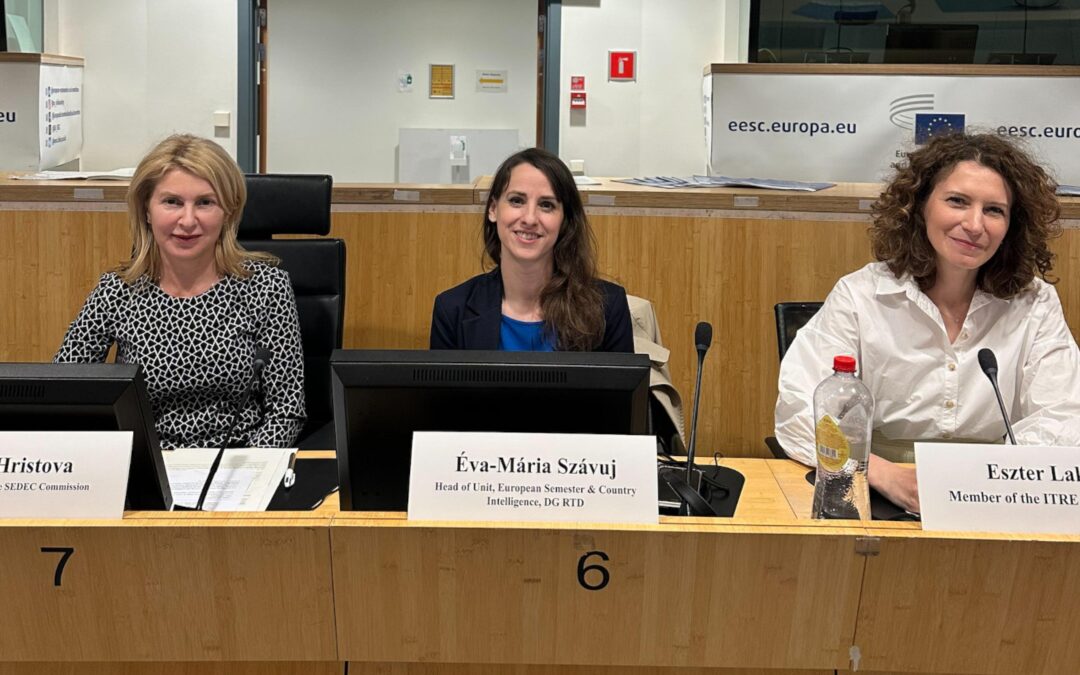
On 5 May 2026, policymakers, regional leaders, and research and innovation experts convened in Brussels for a high-level seminar organised in collaboration with the European Committee of the Regions (CoR). The event focused on the new European Strategy for research and technology infrastructures and how it can better connect local assets with Europe’s broader innovation ambitions.
In the opening session, Tanya Hristova, First Vice-Chair of the SEDEC Commission of CoR, underlined the need to place regions at the centre of Europe’s innovation agenda. She stressed that local authorities are not just implementers, but strategic actors capable of shaping competitive ecosystems. Eszter Lakos, speaking from the perspective of the European Parliament’s ITRE Committee, highlighted the importance of aligning infrastructure investments with Europe’s industrial and technological priorities. She pointed to the need for stronger synergies between EU funding instruments and regional capacities to ensure long-term impact. From the European Commission side, Éva-Mária Szávuj, Head of the European Semester and Country Intelligence Unit and Kirsi Haavisto, Head of Unit of the Knowledge Valorisation & Technology Infrastructures unit at the Directorate-General for Research and Innovation, emphasised that Europe must move towards a more coordinated and accessible infrastructure landscape. They highlighted that improving access for researchers, innovators, and industry across borders will be key to strengthening Europe’s global competitiveness.
The panel discussion further explored how the strategy can respond to the global race for technological leadership. Participants represented various regional stakeholders and pointed to persistent fragmentation and uneven access as major bottlenecks, while also identifying opportunities to scale up collaboration, knowledge valorisation, and cross-regional partnerships. A strong regional perspective was maintained throughout the event. Speakers repeatedly highlighted that cities and regions play a crucial role in hosting and integrating infrastructures into local innovation ecosystems, linking universities, SMEs, and public authorities.