
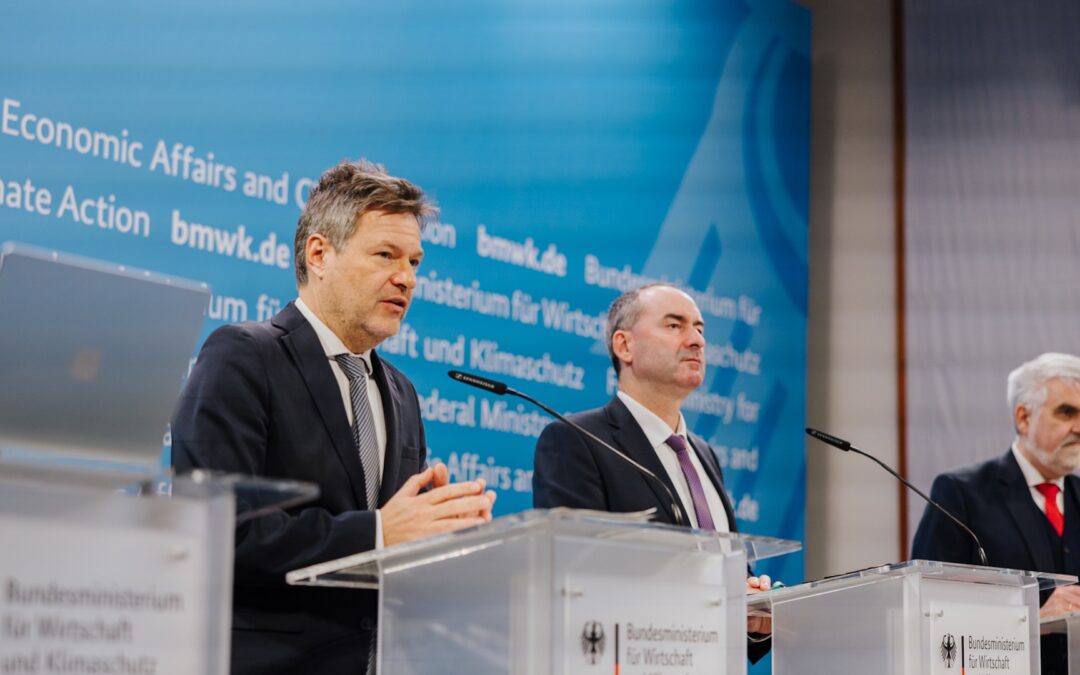
The aim of the new funding programme of the Federal Ministry of the Environment (BMUV) is to create Education Clusters 4.0 – “Training Cluster 4.0 in the lignit regions”, which will improve the quality of dual education 4.0 and thus make it more attractive for the skilled workers of tomorrow in the lignite regions of Germany.
From 2024, the Federal Ministry of the Environment (BMWK) will support sectoral associations of companies and other vocational training players in modernising and jointly advertising their training offers in the Sorbian, Rhine and Central German regions. Over the three-and-a-half-year duration of this project, up to €1.96 million is available per cluster
.
The educational process is to be shaped by students in a modern and sustainable way so that it can offer young people the prospect of staying in the region. An education cluster 4.0 is a sector-specific association of companies, mainly small and medium-sized enterprises (SMEs), “start-ups”, and other actors such as educational institutions or associations with a regional base in one of Germany’s three large lignite regions. Under the leadership of a so-called “cluster agent”, stakeholders work together to modernise dual vocational training in the professions in line with the mission of the respective lignite region, thus promoting structural changes in their area. Mission statements for Education Clusters 4.0 include CO2-neutral energy supply, development of new industrial value chains, securing skilled workers, and other topics such as innovation, sustainability, digitalisation and education.
Accompanying programme with a wide range of activities
The responsible sponsor of the VDI/VDE-IT project supports educational clusters 4.0 with a wide range of networking activities, qualification measures for cluster professionalisation developed in cooperation with the “Institute of German Economics” (IW Cologne) in Cologne, as well as other training on the topics of educational quality, digitalisation and sustainability. It will also take care of shaping public relations across clusters, in particular image campaign, as well as trans-regional exchange, in order to develop synergies and potential for cooperation between clusters.